Mostrar mensagens com a etiqueta neurociência. Mostrar todas as mensagens

05/01/18

A única solução.

© Sergey Ponomarev/The New York Times - Refugees, 2015


- Se a divisão entre as ciências e as humanidades não faz sentido, queria saber de que forma é que a biologia pode ajudar a resolver as crises da democracia que se vivem hoje?
- Sabes, tem tudo a ver, porque a homeostasia (esse conceito da biologia definido como um processo de regulação pelo qual um organismo consegue a constância do seu equilíbrio) aplica-se à expressão do nosso sentimento pessoal, e estende-se facilmente à família e à tribo mais próxima. O problema é quando esse estado tem de se alargar a milhares de pessoas. Aí conseguir o equilíbrio é muito mais difícil. Isso explica por exemplo o recrudescimento dos extremismos na Europa. A única solução, insisto, é educar. Para que o nosso sentimento seja o de aceitar o outro.

27/02/17

© Richard Kalvar/Magnum


The truth is that more I know, the more questions I have. The more questions questions I have, the more I read, and that reading creates further questions. It never stops. What I ask from the reader... is openness, warinesss of prejudice, and a willingness to travel with me to places where the ground may be rocky and the views hazy, but dispate, or perhaps because of, these difficulties, there are pleasures to be found.

Siri Hustvedt, in A Woman looking at Men Looking at Women - essays on Art, Sex, and the Mind

19/10/15

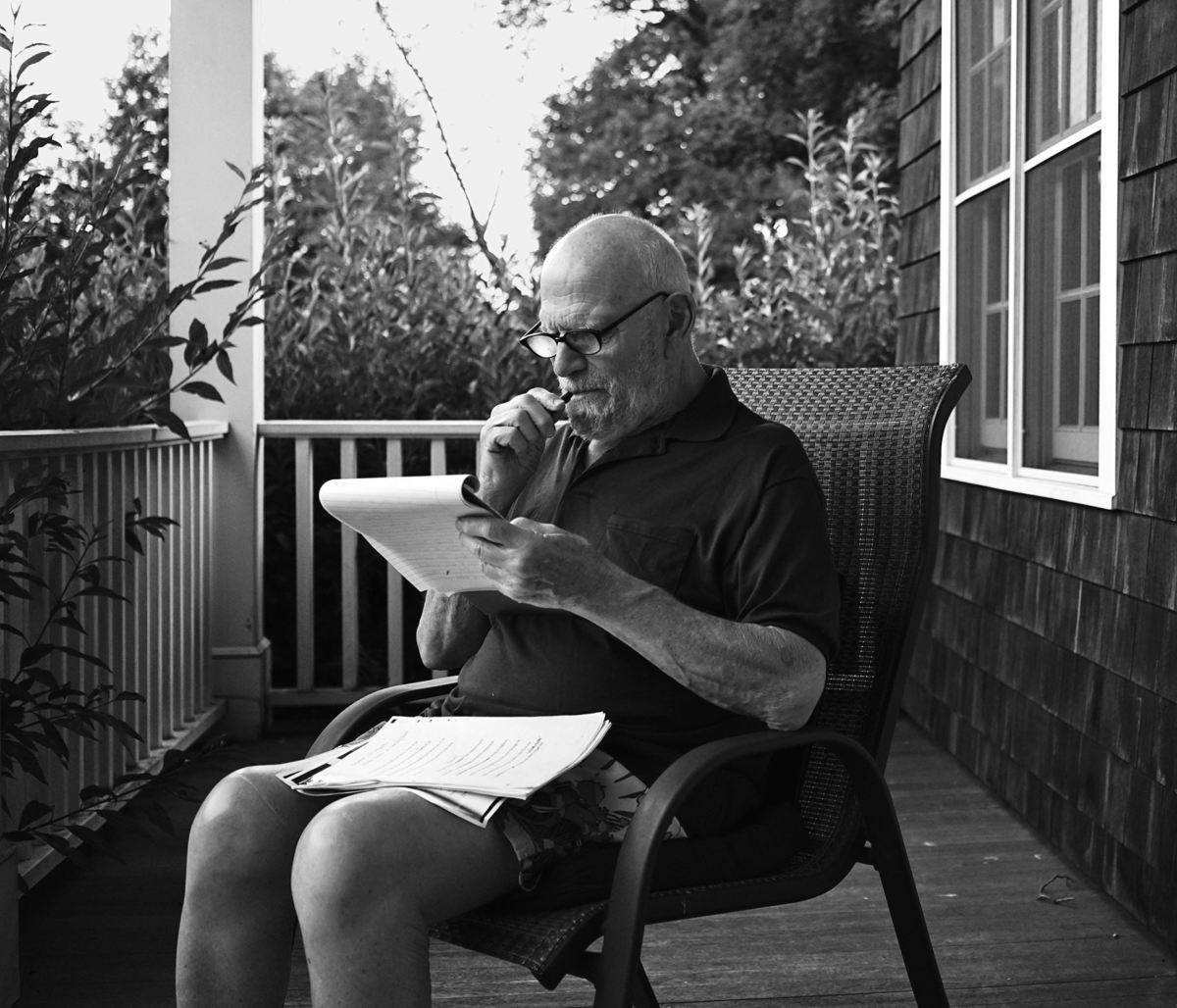
© Bill Hayes | Oliver Sacks

My journals are not written for others, nor do I usually look at them muself, but they are a special, indispensable form of talking to myself.
The need to think on paper is not confined to notebooks. It spreads onto the backs of envelops, menus, whatever scraps of paper are at hand. And often transcribe quotations I like, writing or typing them on pieces of brightly colored paper and pinning them to bulletin board.
...
© Bill Hayes | Oliver Sacks

...
I am a storyteller, for better and for worse. I suspect that a feeling for stories, for narrative, is a universal human dispotion, going with our powers of language, consciousness of self, and autobiographical memory.

The act of writing, when it goes well, gives me pleasure, a joy, unlike any other. It takes me to another place - irrespective of my subject - where I am totally absorbed and oblivious to distracting thoughts, worries, preoccupations, or indeed the passage of time. In those rare, heavenly states of mind, I may write nonstop until I can no longer see the paper. Only then do I realize that evening has come and that I have been writing all day.

Over a lifetime, I have written millions of words, but the act or writing seems as fresh, and as much fun, as when I started it nearly seventy years ago.

Oliver Sacks, in On the move

29/06/15

© Judy Dater

«Não há receitas que se possam dar em casos desses», escreveu Luria [Alexander Romanovich]. «Faça o que a sua ingenuidade ou o seu coração mandarem. Há poucas ou nenhumas esperanças de conseguir qualquer tipo de recuperação da sua memória. Mas um homem é mais do que a memória. Tem sentimentos, vontade, sensibilidade e consciência moral - assuntos acerca dos quais a neuropsicologia não se pode pronunciar. E é aí, para além do reino da psicologia impessoal, que se podem encontrar formas de o tocar e de o mudar. (...) No campo da neuropsicologia há pouco ou nada a fazer, mas no reino do indivíduo pode haver muito a fazer."

Luria citado por Oliver Sacks, in O homem que confundiu a mulher com um chapéu

16/06/15

© Judy Dater 


«É preciso começar a perder a memória, nem que sejam só fragmentos, para perceber que ela é a essência da vida. (...) A nossa memória é a nossa coerência, a nossa razão, o nosso sentir, até as nossas acções.» 

Luís Buñuel citado por Oliver Sacks in, O homem que confundiu a mulher com um chapéu

17/04/15

music never sleeps...


Philip Glass | The Photographer: Eadweard Muybridge


Irving J. Massey points out that "music is the only faculty is not altered by the dream environment, whereas action, character, visual elements and language may all be modified or distorted in dreams." More specifically, he writes, "music in dream does not become fragmented, chaotic or incoherent, neither does it decay as rapidly as do the other components of dreams on our awakening."
(...)
Massey concludes that "Music in dreams then is the same as music in our waking life... One might say that music never sleeps..."

Oliver Sacks, in Awake and Asleep: Musical Dreams - Musicophilia


BBC | The Weird World of Eadweard Muybridge

27/02/15

© Marion Ettlinger | Siri Hustvedt


After reading the essays collected in this book, I understood that although they take on a number of subjects, they are linked by an abiding curiosity about what it means to be human. How do you see, remember, feel, and interact with other people? What does it mean to sleep, to dream, and to speak? When we use the word self, what are we talking about?
(...)
It is importante to remember that despite the plethora of solutions, who we are and how we got that way remain open queries, not only in the humanities but in the sciences as well.

Siri Hustvedt, in Living,Thinking, Looking - essays


"O Valor da Liberdade - diálogos sobre as possibilidades do humano" com Siri Hustvedt, sábado 28, na SIC Notícias, às 20h. Repete domingo, às 14h30 e 01h30.